Prediction markets exploded, and traders ended up living in browser-tab chaos: Polymarket here, Kalshi there, different accounts, different odds formats, no unified view of positions. Vampire Trade is an aggregator terminal: one interface to track, compare, and trade across platforms.
I designed it end-to-end between October 2025 and January 2026, my most recent and most product-heavy engagement.
The problem
A serious prediction-market trader juggles multiple venues because odds diverge and liquidity fragments. Every venue has its own account model, pricing display, and settlement quirks. The job wasn't to redesign any single exchange; it was to design the layer above all of them.
What I designed
- A unified trading interface that aggregates multiple prediction markets into one seamless experience: same odds language, same order flow, regardless of venue underneath.
- A positions dashboard where traders track odds, exposure, and opportunities across platforms in one ledger.
- Market discovery: browsing and comparing markets across venues, surfacing where the same event is priced differently.
- Trade execution flow: from discovery to filled order with venue routing made legible, not hidden.
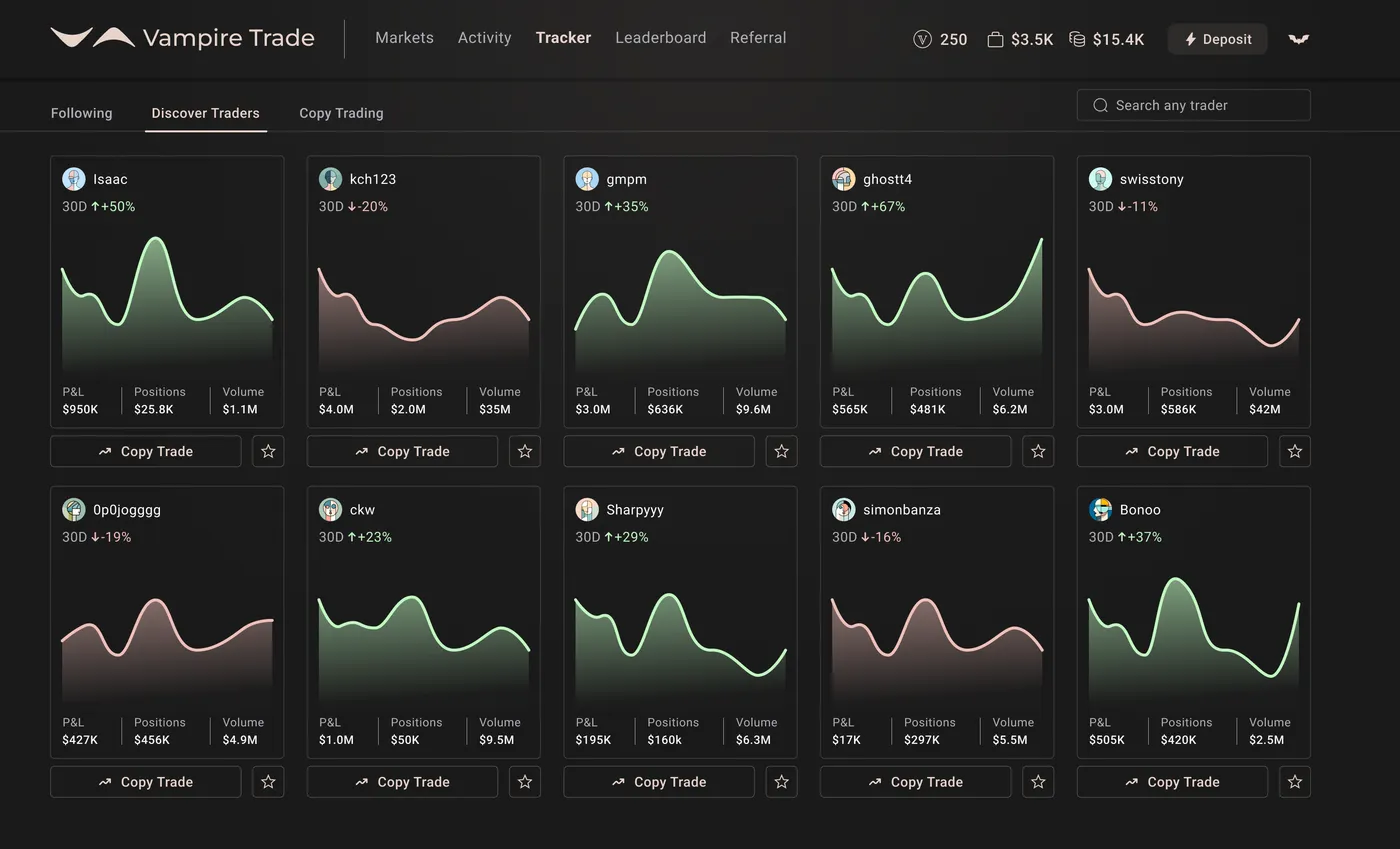
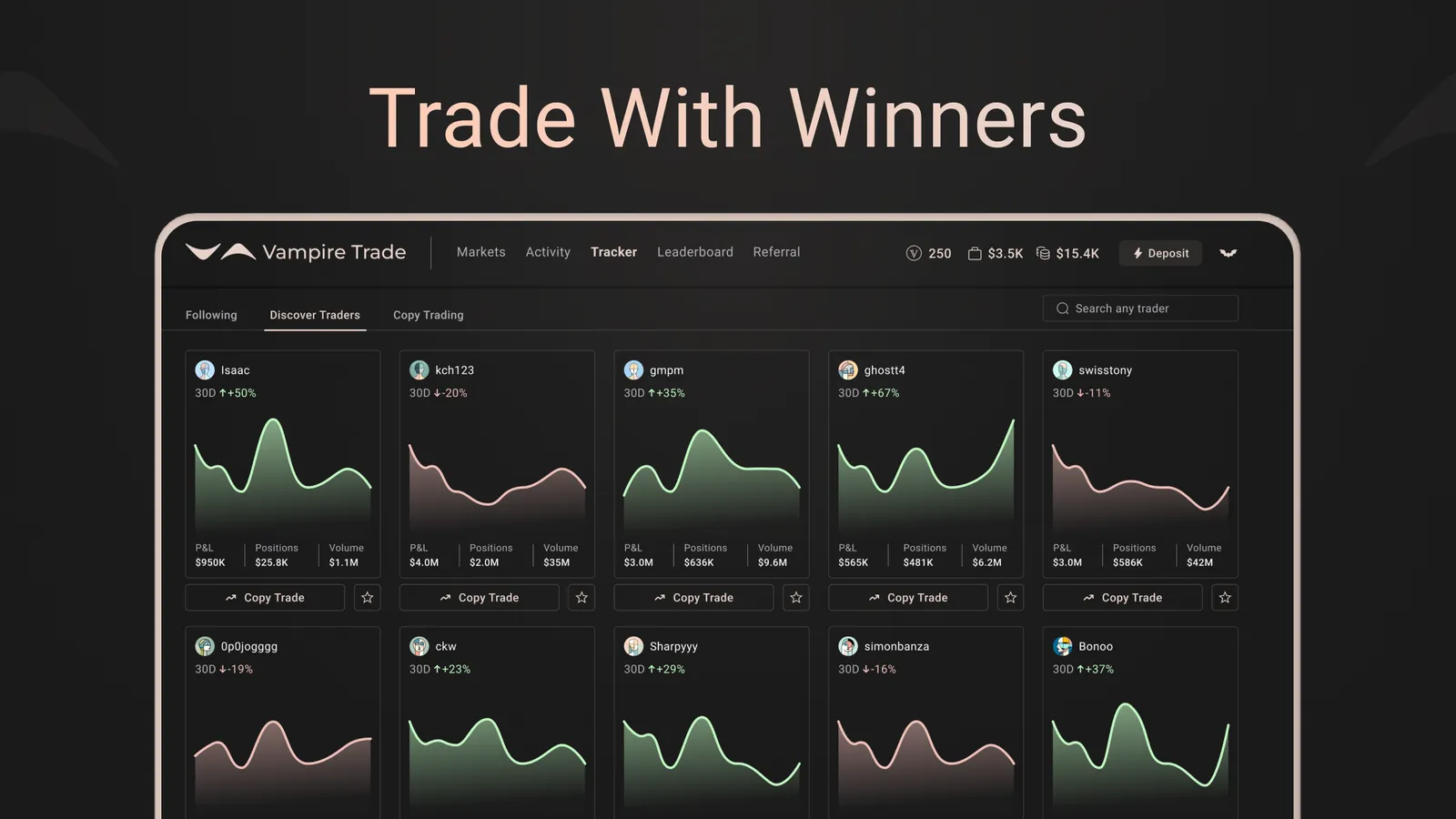
- Copy trading: follow a proven trader's positions with your own risk settings.
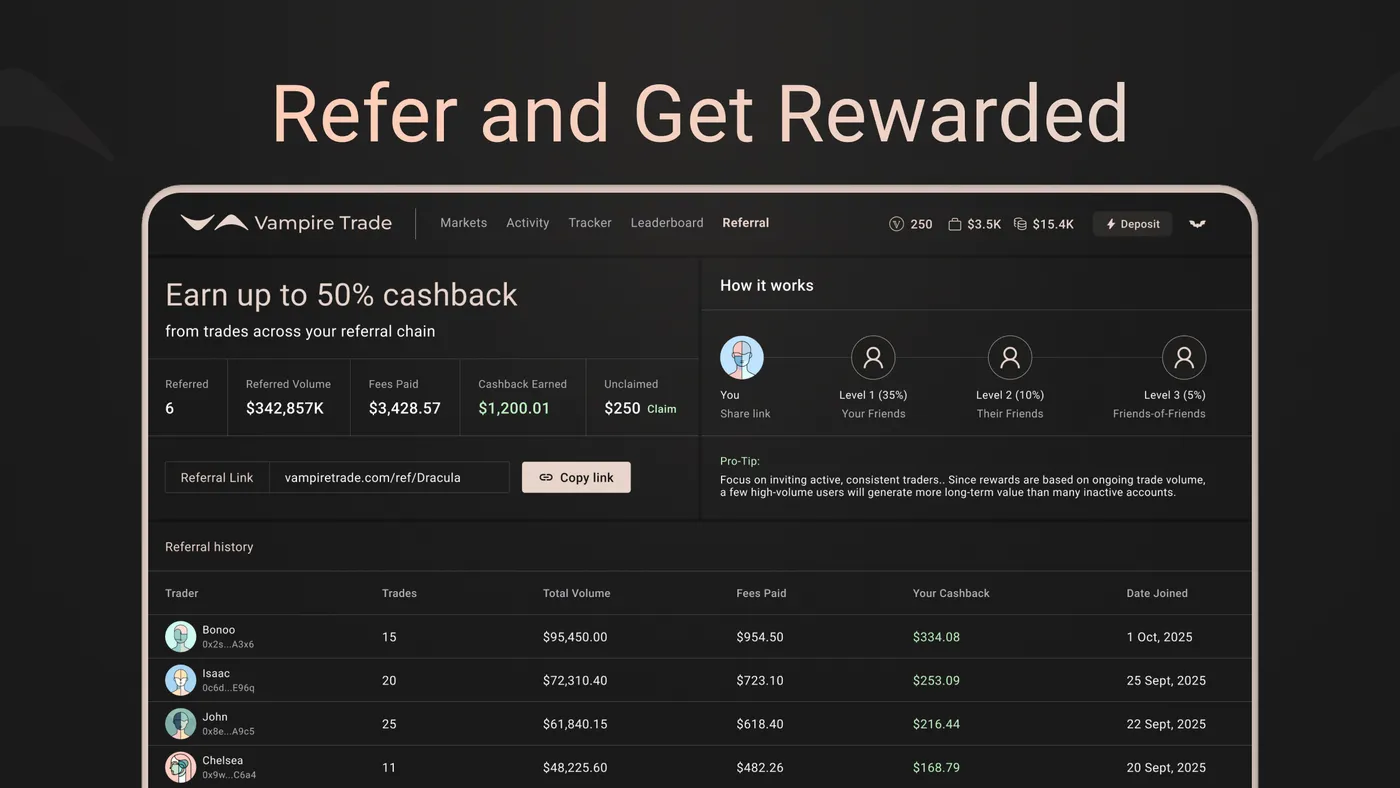
- Referral and points system: the growth mechanics, designed as part of the product rather than bolted on.
- Cross-chain onboarding: users arrive from different chains and custody setups; the flow meets them where they are.
The terminal aesthetic
A trading terminal earns trust through density and precision: tabular numbers, tight hierarchies, restrained color reserved for state (up, down, filled, pending). The visual language had to feel like professional equipment while staying navigable for traders coming from consumer betting apps.